
- Home
- Products
- Car Detailing Products
- Foam Sprayers & Pump Sprayers
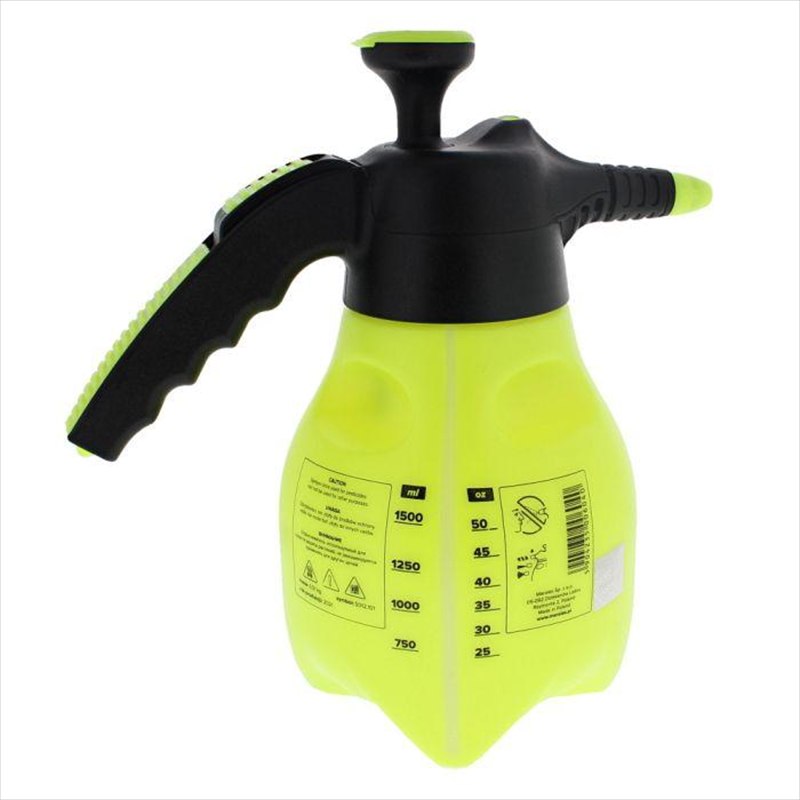
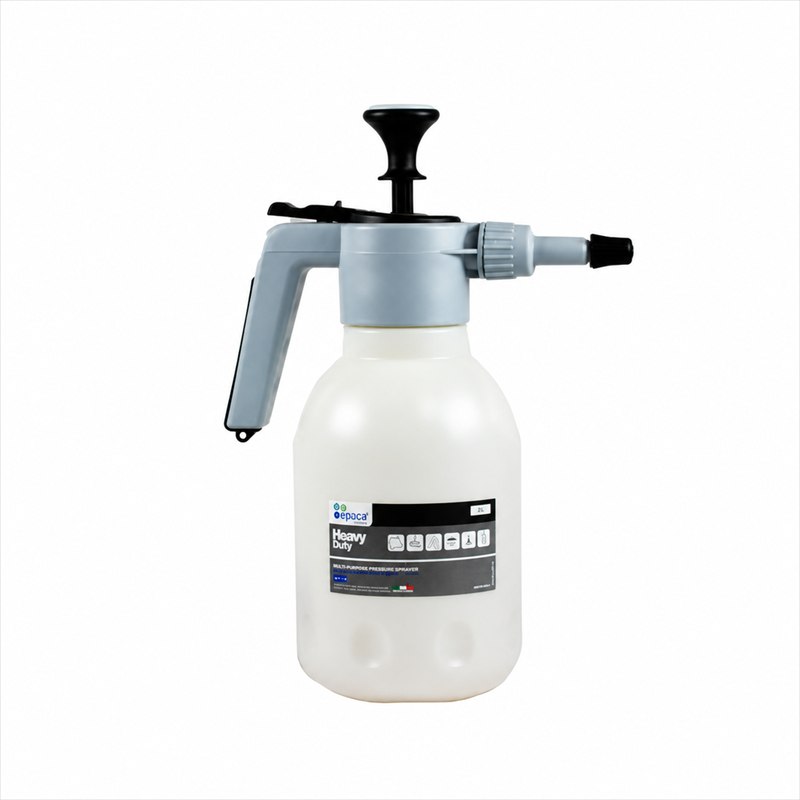
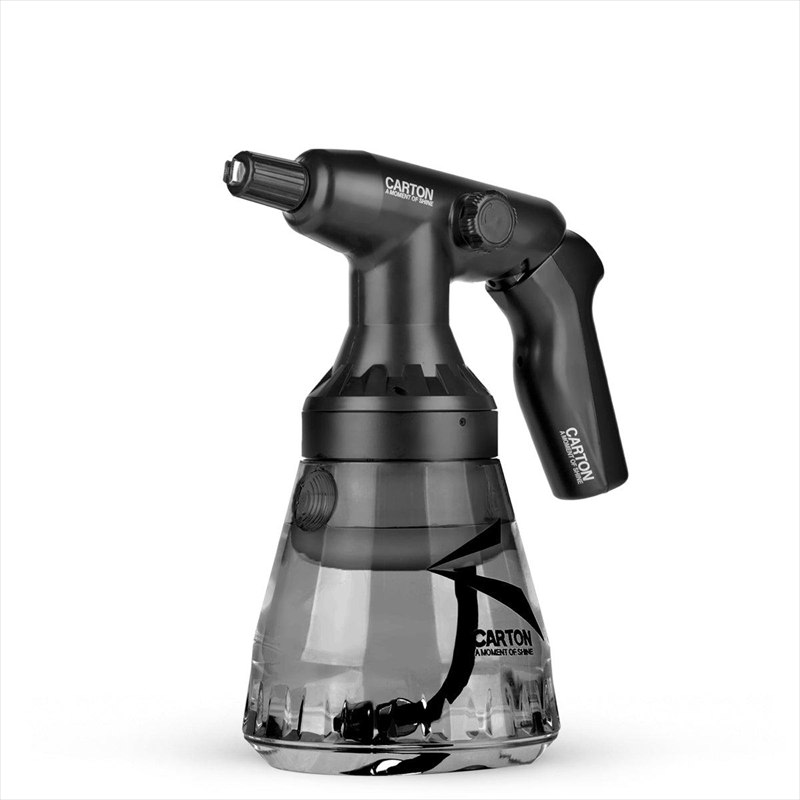
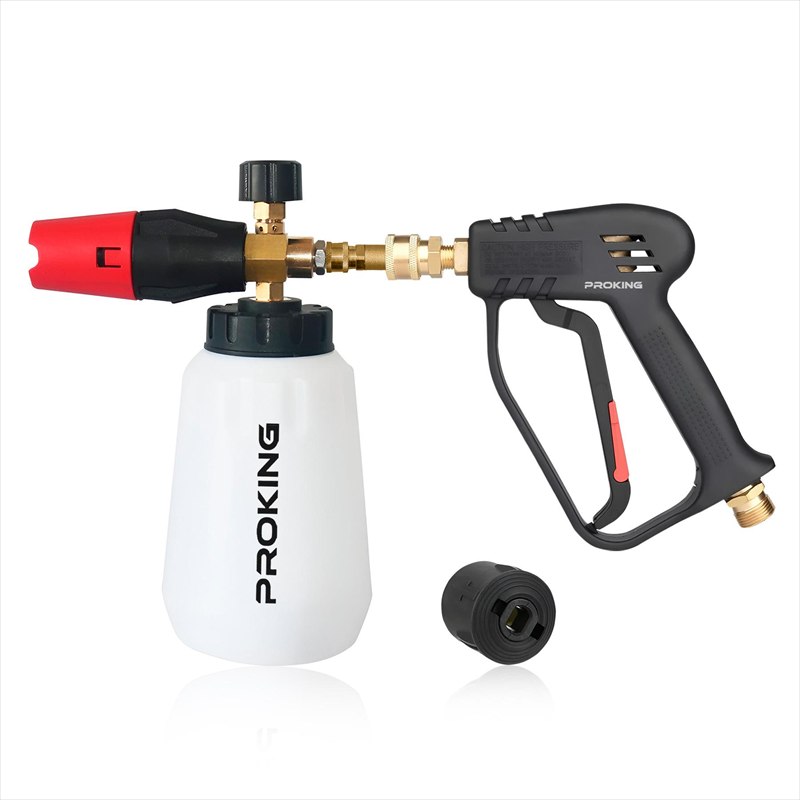
Foam Sprayers & Pump Sprayers
Product Details
Foam Sprayers and Pump Sprayers Product Overview
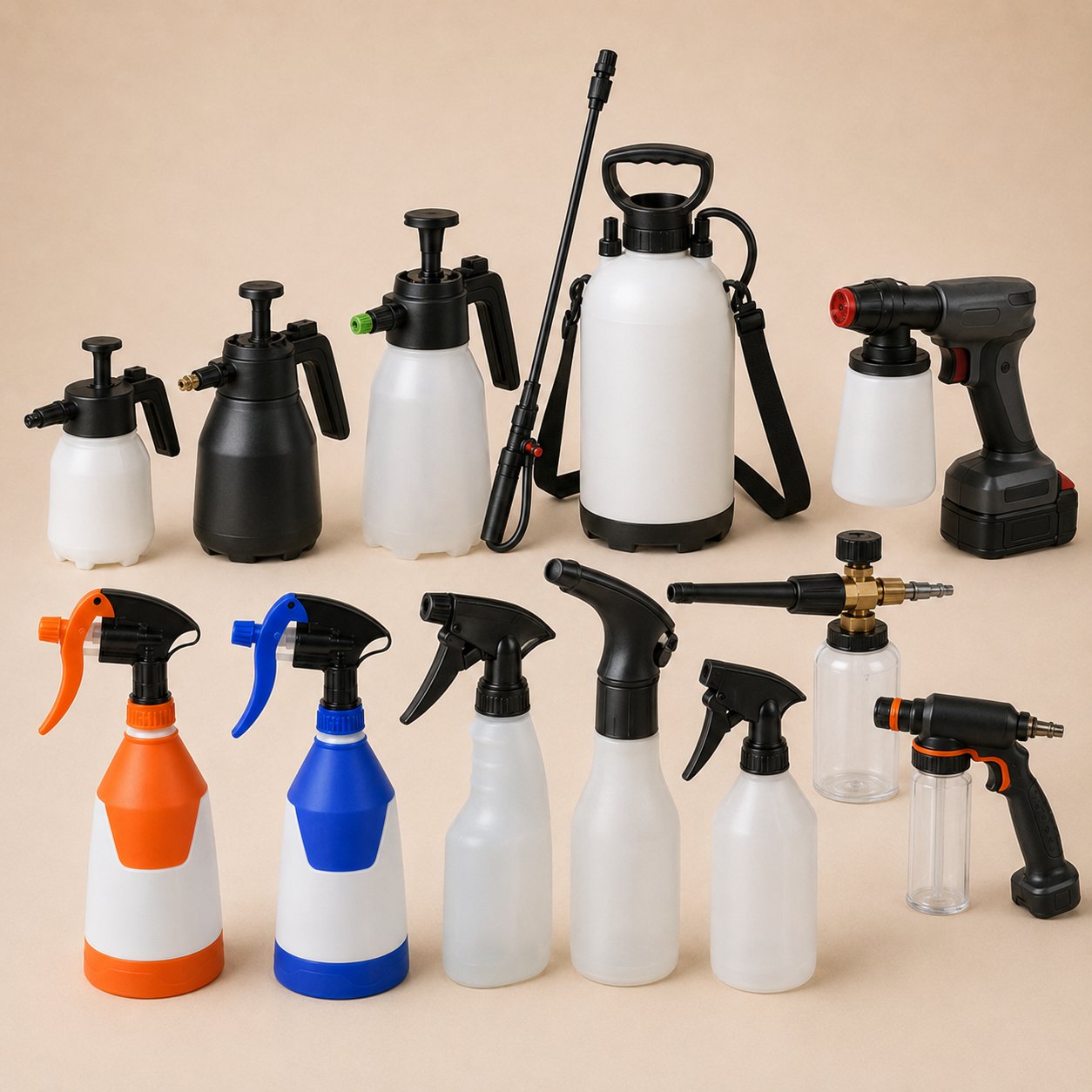
Foam sprayers and pump pressure sprayers apply car shampoos, pre-wash products, wheel cleaners, all-purpose cleaners and other compatible formulations without requiring the same equipment as a pressure-washer foam cannon. The correct model depends on the chemical, desired output, application frequency, bottle capacity and working environment.
JanetSourcing helps buyers compare sprayer manufacturers, coordinate samples and confirm the complete liquid-contact system. Bottle resin, seals, pump housing, piston, spring, tubing and nozzle should all be reviewed before a chemical-compatibility claim is accepted.
What Problems Can a Well-Matched Sprayer Solve?
A sprayer is only reliable when its pressure system and wetted components suit the intended formulation and use cycle. Product selection should address the following operational risks.
Leakage and Pressure Loss
Incompatible or poorly fitted seals can swell, deform or allow pressure to escape. Confirm the seal material, threaded connections and pressure-retention performance on the specific model.
Irregular Foam or Spray Pattern
Nozzle geometry, foaming inserts, pressure, chemical dilution and water quality all affect output. Compare samples with the same formulation and operating method.
Excessive Pumping Effort
For frequent use, handle design, pump efficiency, bottle capacity and pressure release influence operator comfort. A larger bottle is not always more practical if it requires excessive pumping or becomes difficult to handle.
Premature Chemical Damage
Chemical resistance is not determined by NBR, EPDM or FKM seals alone. The bottle, pump, tube, spring and nozzle may also contact liquid or vapor and should be reviewed against the actual SDS and concentration.
Maintenance and Spare-Part Gaps
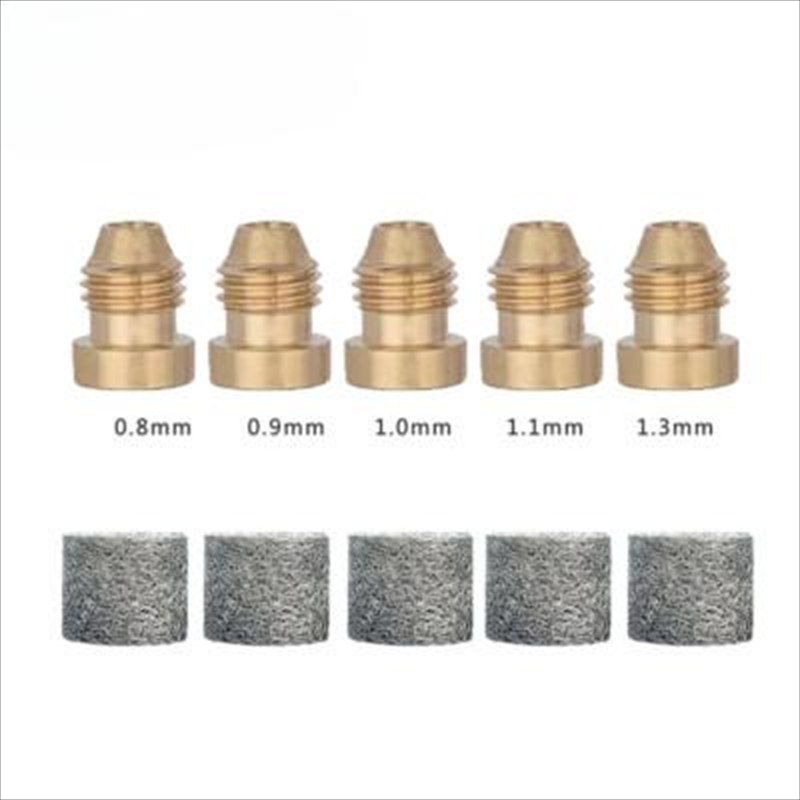
Blocked nozzles, contaminated foaming inserts and worn seals reduce performance. Replaceable nozzles, inserts, seal kits and clear maintenance instructions can improve serviceability for professional users.
How to Choose the Right Foam or Pump Sprayer
Choose the spraying system by application, not by product name alone. Two wheel cleaners or degreasers can use different formulations and may require different materials.
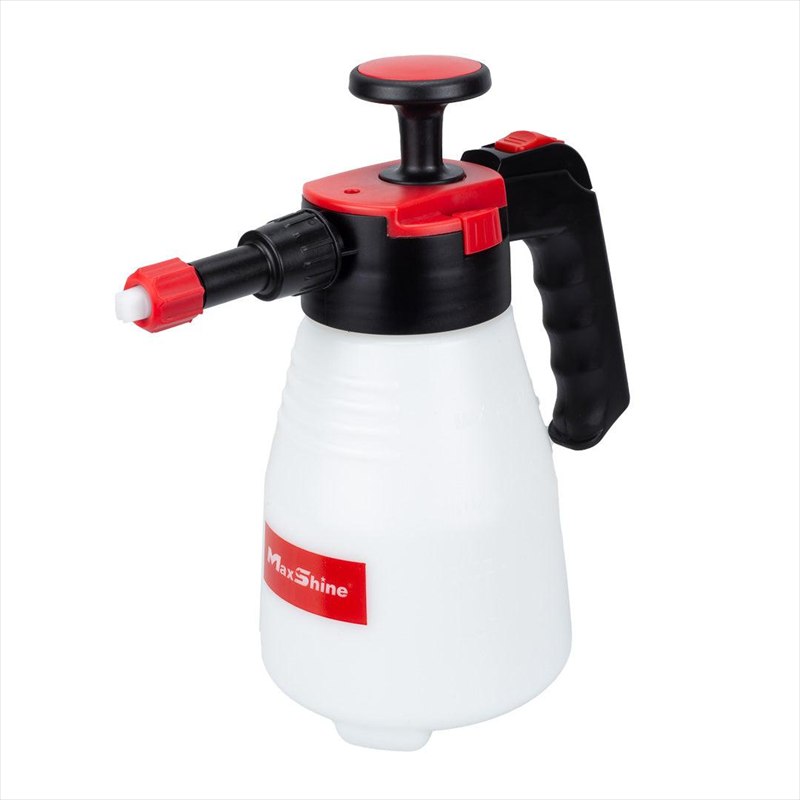
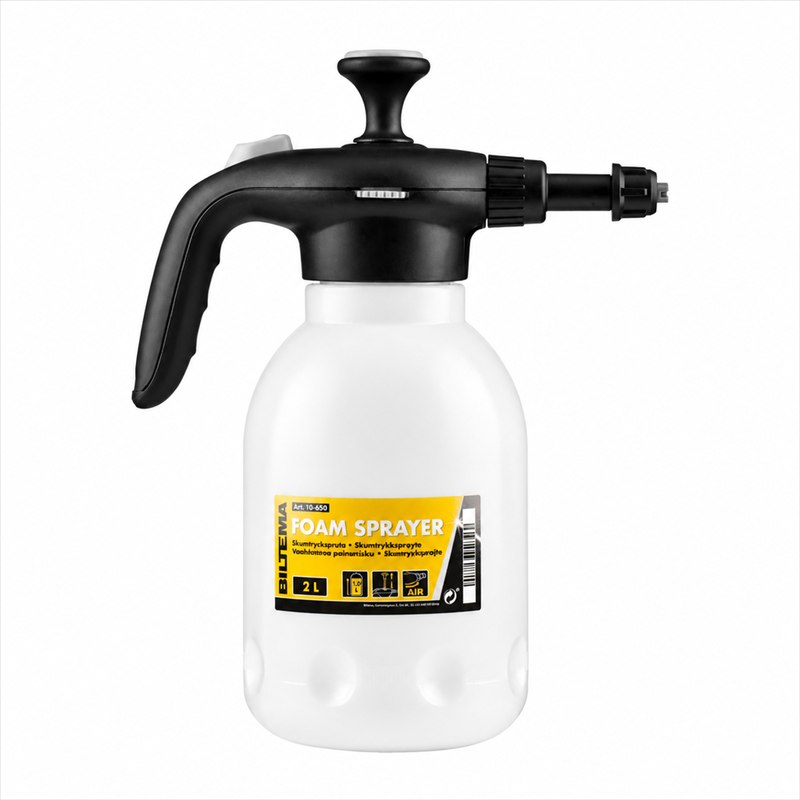
Manual Foam Sprayer
Hand pumping pressurizes the bottle and a foaming nozzle or insert mixes air and liquid. It is useful for selected shampoos and pre-wash products when a pressure washer is not available.
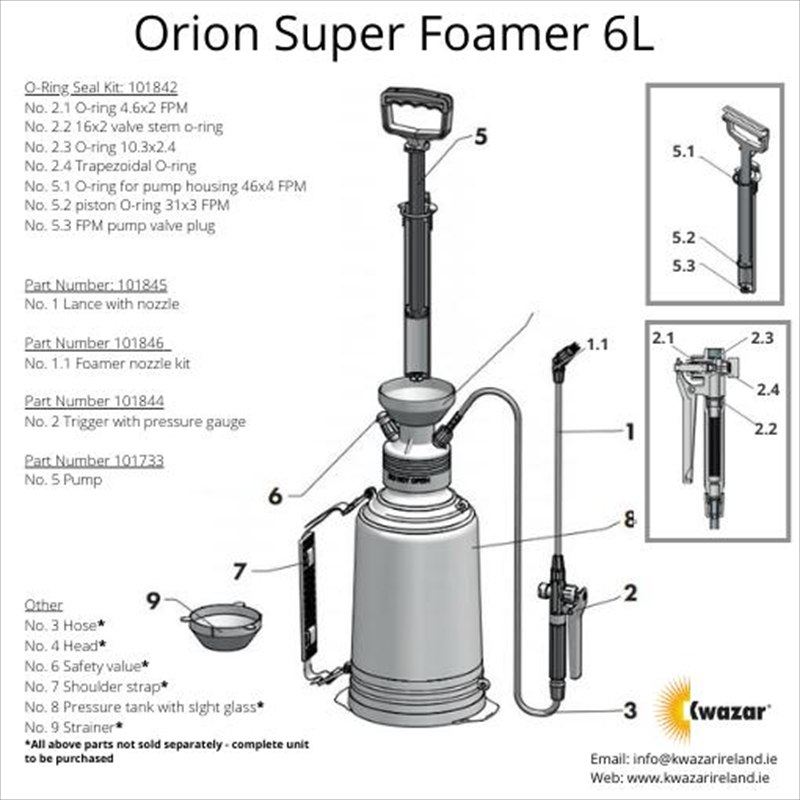
Pump Pressure Sprayer
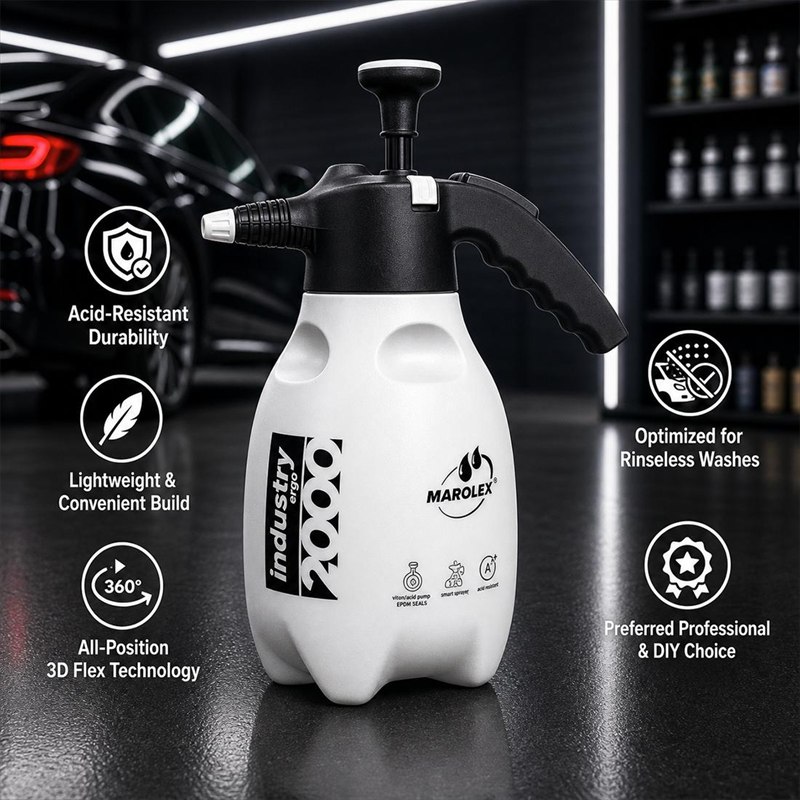
A pressure sprayer produces liquid mist, fan or jet patterns depending on the nozzle. It can suit compatible APC, degreaser and wheel-cleaner applications when chemical resistance is confirmed.
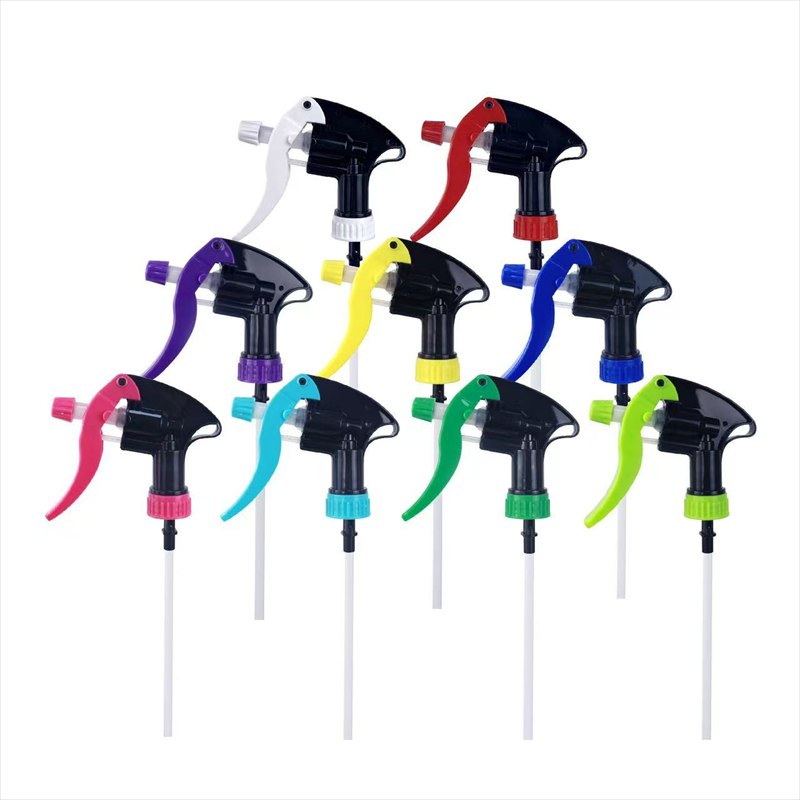
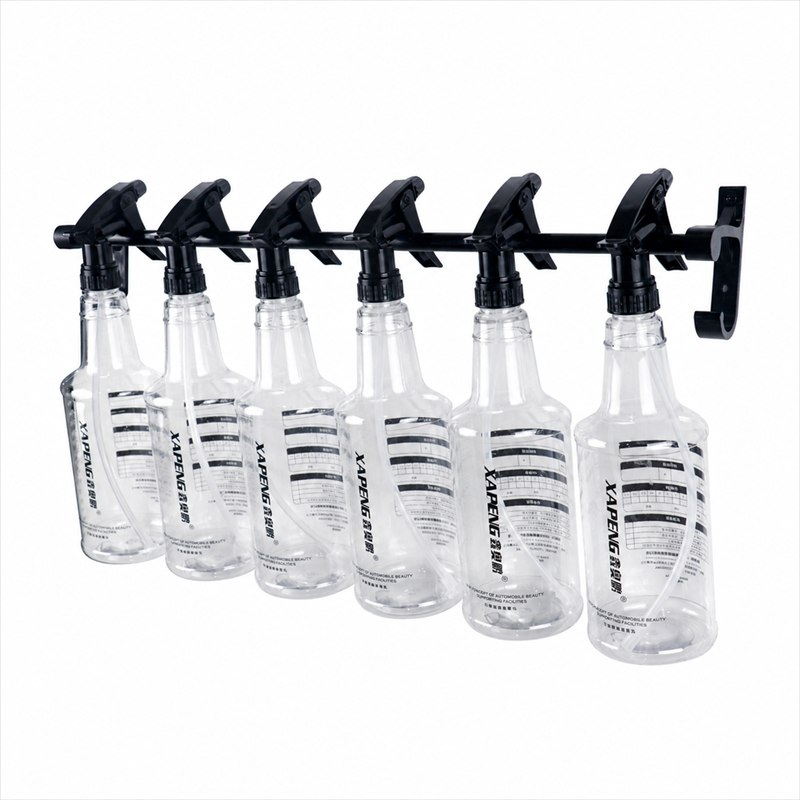
Trigger Spray Bottle
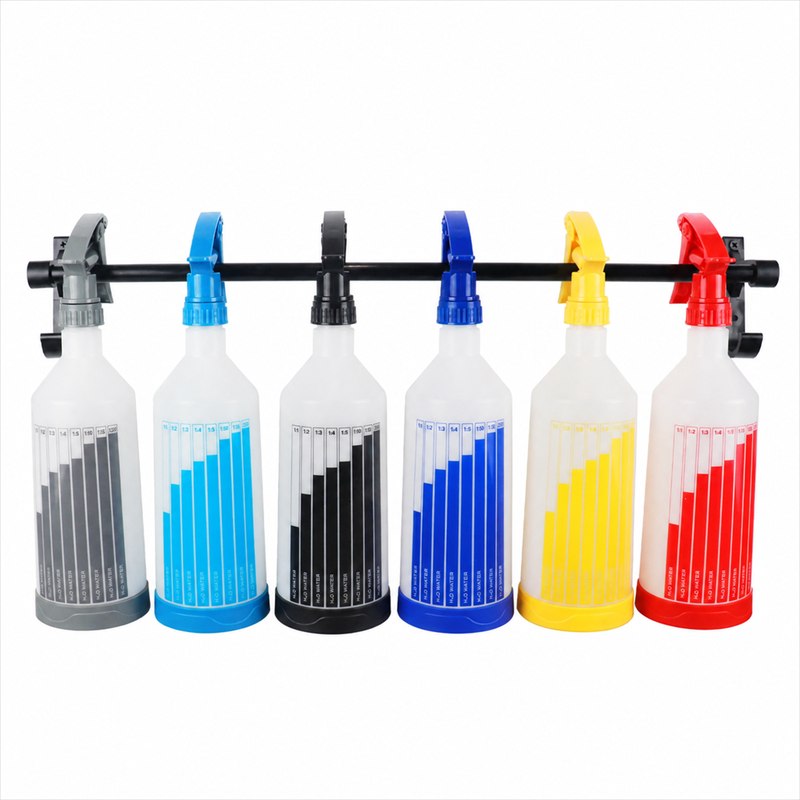
Trigger sprayers dispense liquid without pressurizing the complete bottle. They may suit controlled interior, glass or general detailing use where continuous pressurized output is unnecessary.
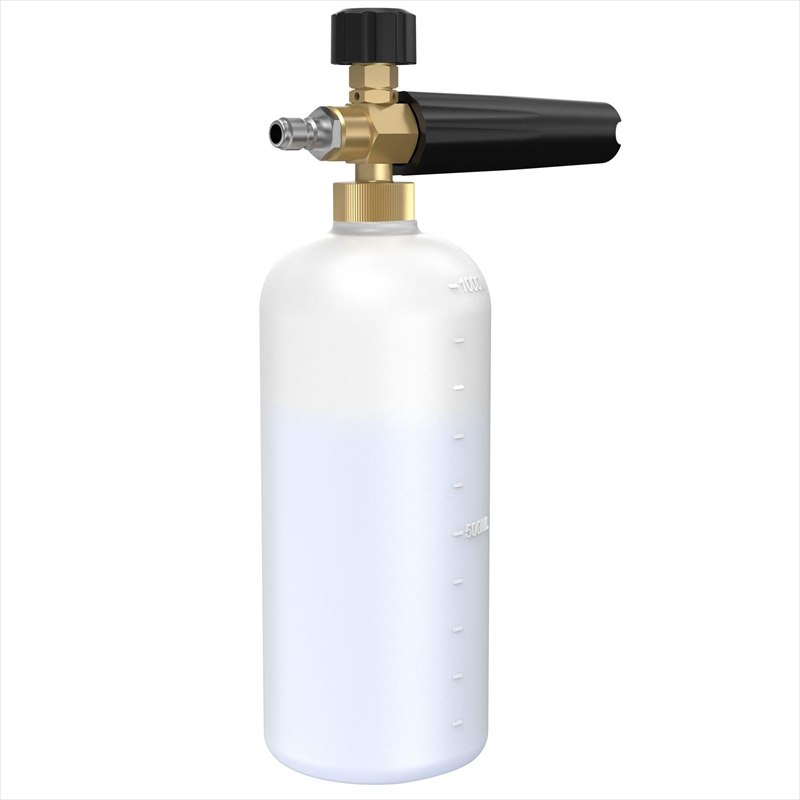
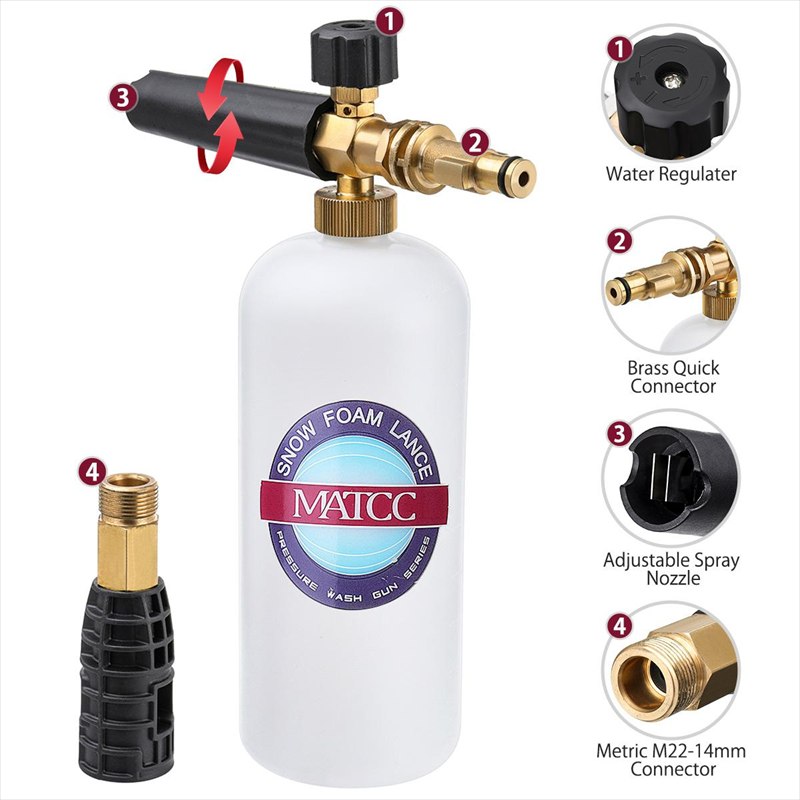
Foam Cannon
A foam cannon uses a compatible pressure washer and lance assembly. It is a different system and may be more appropriate for high-volume pre-wash application in equipped car wash operations.
Seal and Component Selection
NBR, EPDM and FKM have different general resistance profiles, but none is universally compatible. Provide the SDS, concentration, contact time and working conditions for manufacturer review and practical testing.
Sprayer Specifications and Customization Options
Use model-specific information for quotations. Broad claims such as acid resistant or solvent resistant should be supported by the actual component list and agreed test conditions.
| Item | Options or Confirmation Points |
|---|---|
| Sprayer type | Manual foam sprayer, pump pressure sprayer, trigger sprayer or powered model |
| Capacity | Nominal and usable filling capacity; common options depend on model |
| Bottle and pump materials | Material identification for all wetted and vapor-contact components |
| Seal system | NBR, EPDM, FKM or model-specific alternative after compatibility review |
| Output | Foam, mist, fan, jet or adjustable pattern; output tested under defined conditions |
| Pressure system | Rated pressure, retention, pump cycles and pressure-release feature where applicable |
| Chemical information | SDS, concentration, temperature, contact time and intended formulation |
| Service parts | Replacement nozzles, foaming inserts, seals, tubes or spare-part kit |
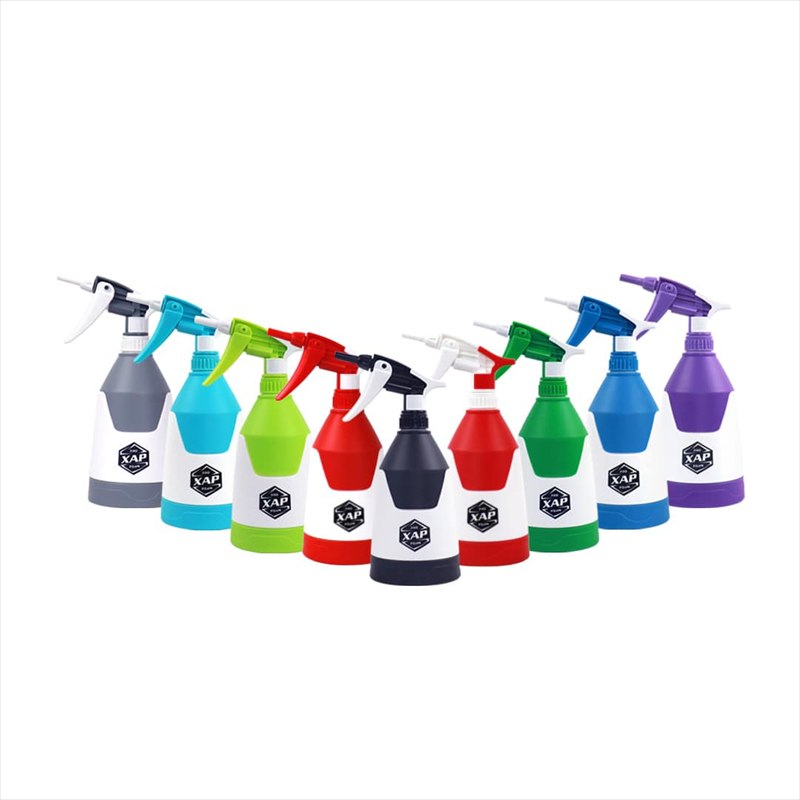
| Branding and packaging | Bottle color, printed logo, label, retail box, instructions, barcode and carton mark |
| Quotation details | Type, capacity, chemical, spray requirement, quantity, branding and destination |
Sprayer Sourcing and Chemical Compatibility Workflow
Compatibility should be confirmed for the exact sprayer model and actual chemical. General material charts can guide screening but do not replace representative testing.
Phase 1 Application and Chemical Review
Action: Collect the SDS, formulation type, concentration, use frequency, capacity, output and target market.
Quality focus: Identify liquid- and vapor-contact components and any safety or transport constraints.
Phase 2 Model and Supplier Screening
Action: Compare suppliers with suitable pressure systems, component materials and replacement-part options.
Quality focus: Request model-specific drawings or material lists instead of relying on a generic chemical-resistant label.
Phase 3 Sample Testing
Action: Arrange representative sprayers for leakage, pressure retention, pattern, foam and pump-cycle evaluation.
Quality focus: Test with the actual formulation or an agreed equivalent under defined fill, dilution, temperature and contact conditions.
Phase 4 OEM Confirmation
Action: Approve bottle color, logo, label, nozzle configuration, instructions, packaging and spare parts.
Quality focus: Check that branding choices do not obscure fill lines, warnings or required product information.
Phase 5 Pre-Shipment Inspection
Action: Arrange visual and functional checks according to the agreed scope.
Quality focus: Check assembly, leakage, pressure release where applicable, spray pattern, pack quantities, labels and accessories.
Phase 6 Shipping Coordination
Action: Coordinate receiving and consolidation with compatible car care products when suitable.
Quality focus: Confirm product classification, carton protection and any restrictions associated with included chemical samples or products.
Why Source Sprayers with JanetSourcing?
Compatibility Questions Before Quotations
We help buyers provide the chemical and operating information suppliers need, reducing the risk of selecting a sprayer from appearance alone.
Comparable Sample Testing
Sprayer options can be evaluated with the same chemical, dilution and test method so foam and spray results are easier to compare.
Private-Label and Spare-Part Coordination
JanetSourcing can coordinate bottle colors, logos, labels, instructions, retail boxes and model-specific spare-part kits.
Range Building
Manual foam sprayers, pressure sprayers, trigger bottles and related detailing accessories can be coordinated as a product range and consolidated where practical.
Frequently Asked Questions
What is the difference between a foam sprayer and a pump pressure sprayer?
A foam sprayer uses a foaming nozzle or insert to generate foam, while a pressure sprayer normally delivers liquid as mist, fan or jet. Both use hand-generated pressure on common manual models.
Which seal is best for car detailing chemicals?
There is no universal best seal. NBR, EPDM and FKM have different resistance profiles, and the final choice depends on the complete formulation, concentration, temperature and exposure.
Is an acid-resistant sprayer suitable for every wheel cleaner?
No. Wheel-cleaner formulations vary. Confirm compatibility of the bottle, seals, pump, tube and nozzle with the exact product and conduct representative testing.
What affects foam thickness?
Chemical formulation, dilution, water quality, foaming insert, nozzle design, working pressure and maintenance all influence foam behavior.
Can I compare sprayers using water only?
Water testing is useful for leakage and pattern checks but may not reveal chemical swelling, softening, cracking or vapor effects. Test the intended formulation where appropriate.
What should be checked on production samples?
Review fill capacity, leakage, pressure retention, pump action, spray or foam pattern, pressure release, component materials, labels and packaging.
Can JanetSourcing arrange private-label sprayers?
Yes, subject to supplier and order requirements. Options may include bottle color, logo, label, nozzle configuration, instructions, retail packaging and spare parts.
What information is needed for a quotation?
Send the sprayer type, capacity, intended chemical and SDS, dilution, spray or foam requirement, quantity, branding, packaging and destination market.
Request Sprayer Sourcing Options
Share the intended chemical, SDS, concentration, capacity, output, expected use frequency, quantity and branding requirements. JanetSourcing can coordinate model comparison and representative sample testing before bulk purchasing.
PRODUCTS
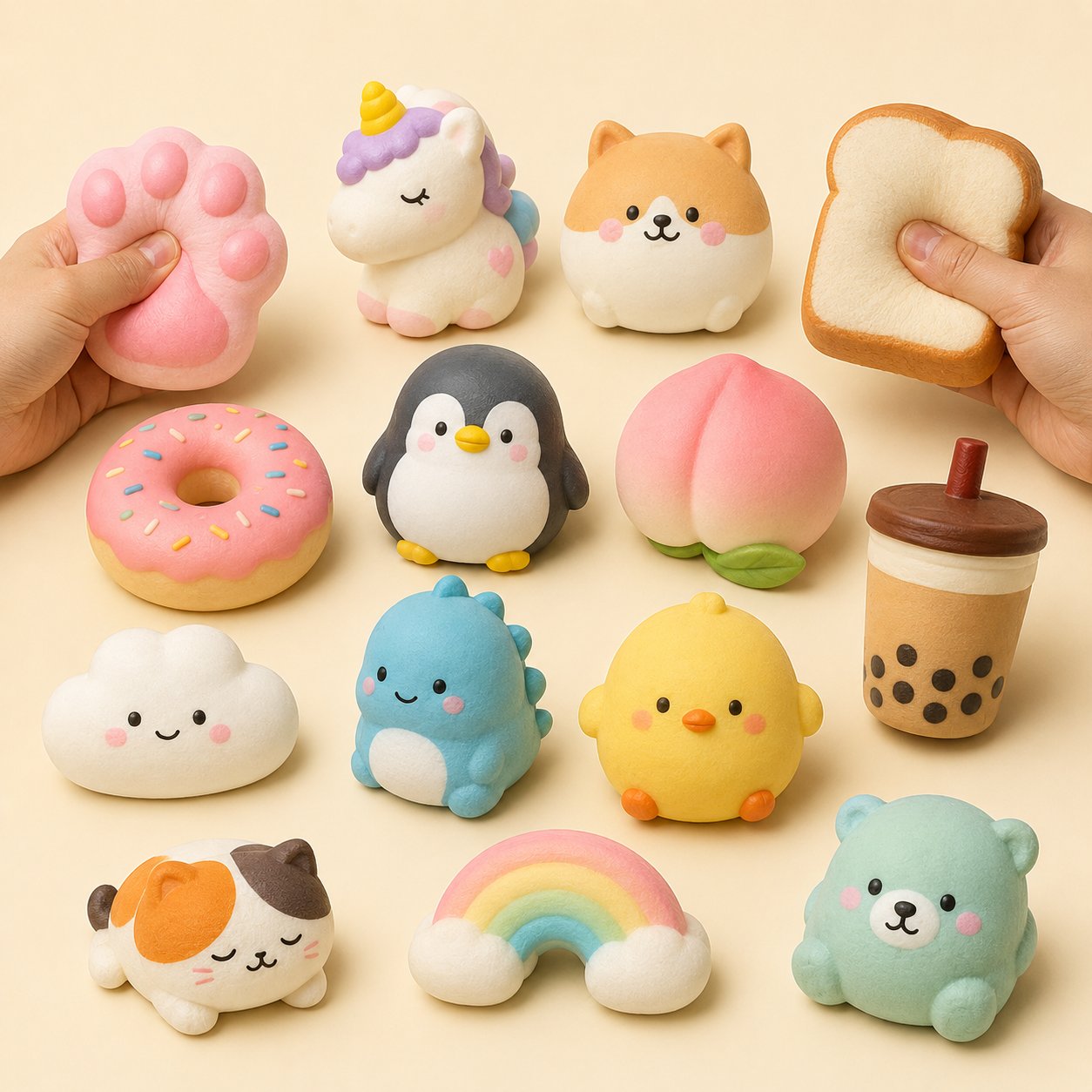
Squishy Toys
Soft and fun squishy toys designed for squeezing, stress relief and sensory play, available in various cute shapes, sizes, colors and designs for toy, gift and novelty markets.
Plush & Soft Toys
Soft and cuddly plush toys designed for play, comfort, decoration and gifting, available in various animals, characters, sizes, fabrics and designs for toy, gift and promotional markets.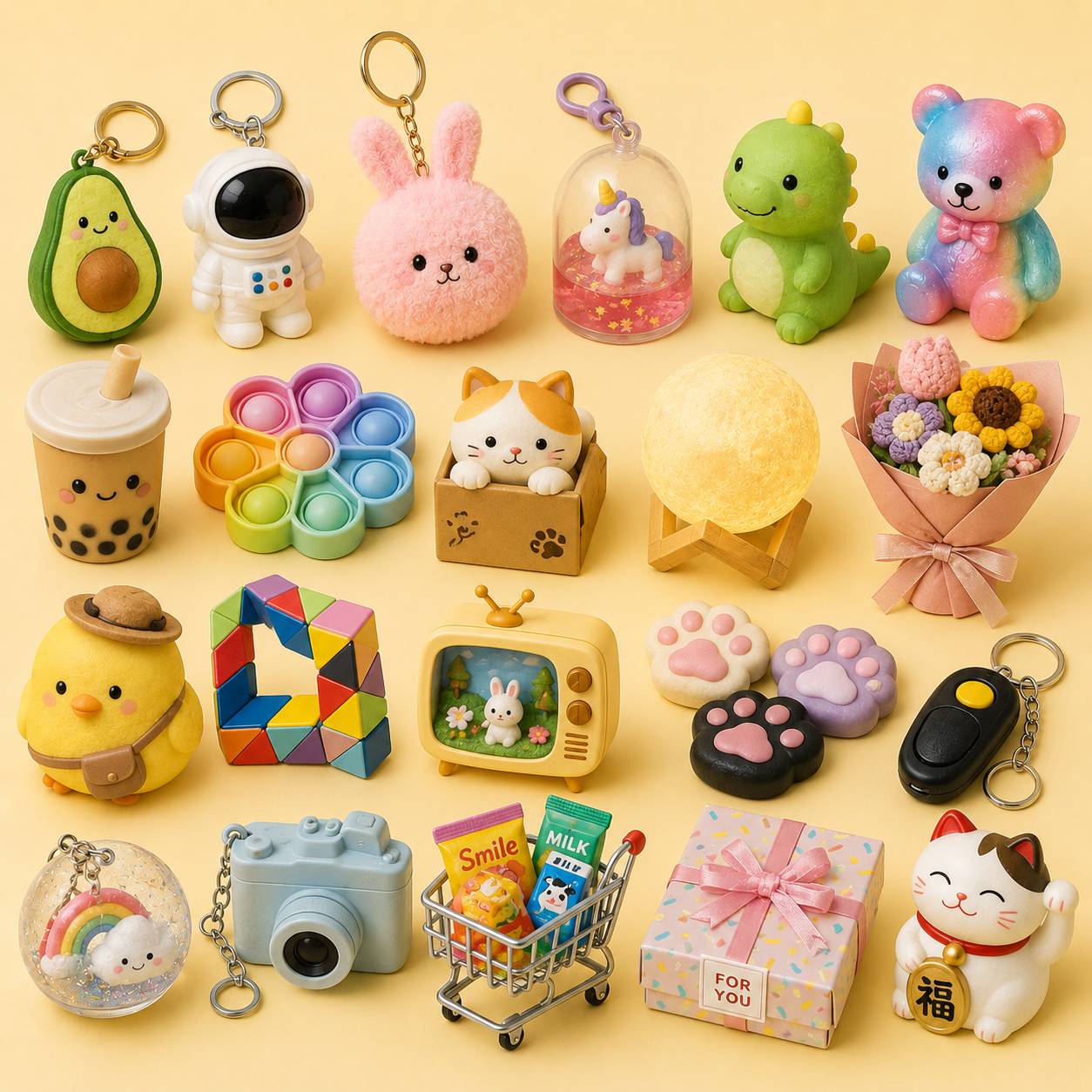
Novelty & Gift Items
Creative and eye-catching novelty and gift items designed for gifting, entertainment, decoration and impulse purchases, available in various fun, practical and trendy designs for gift, retail and promotional markets.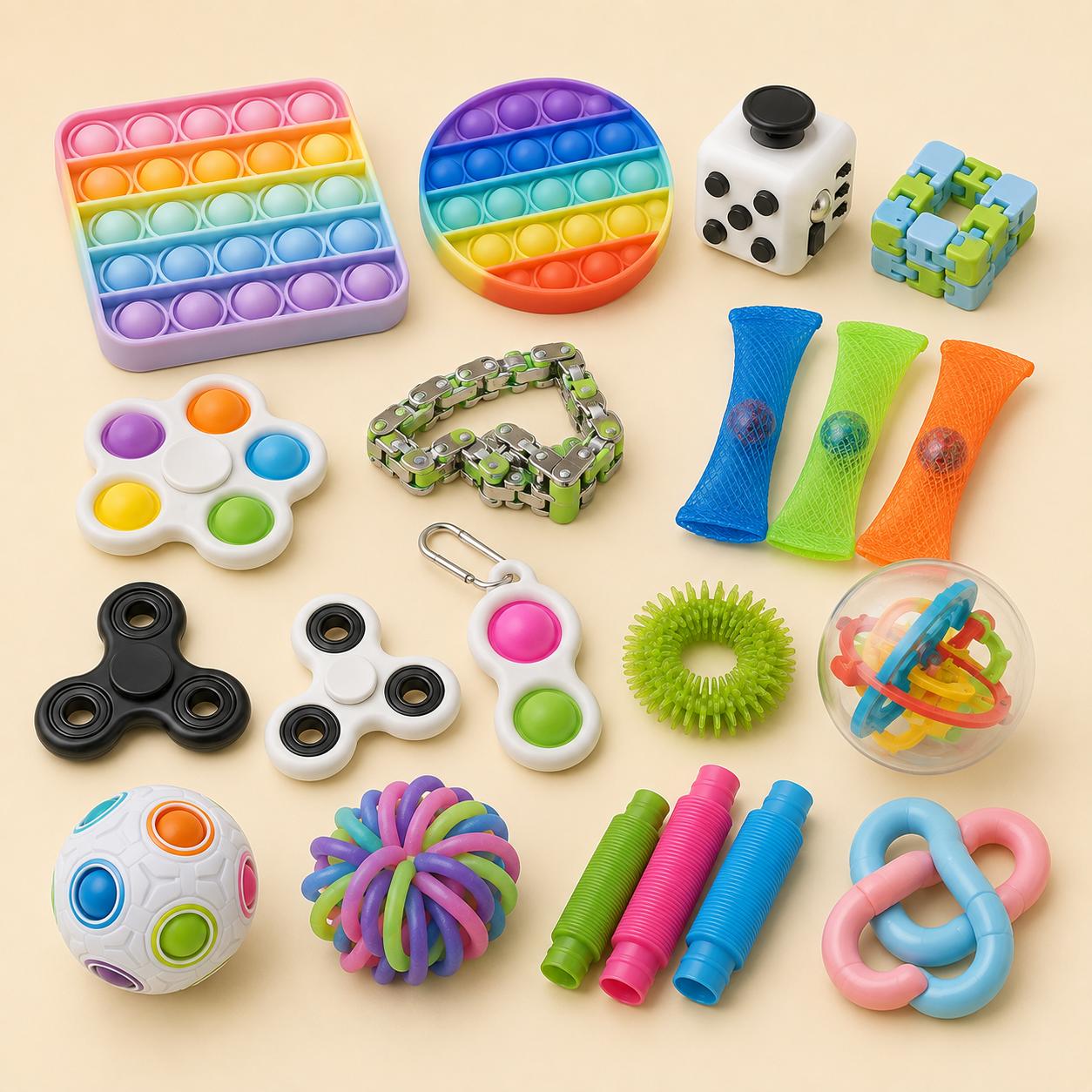
Fidget & Sensory Toys
Fun and engaging fidget and sensory toys designed for stress relief, sensory stimulation and interactive play, available in various shapes, materials, colors and designs for toy, gift and educational markets.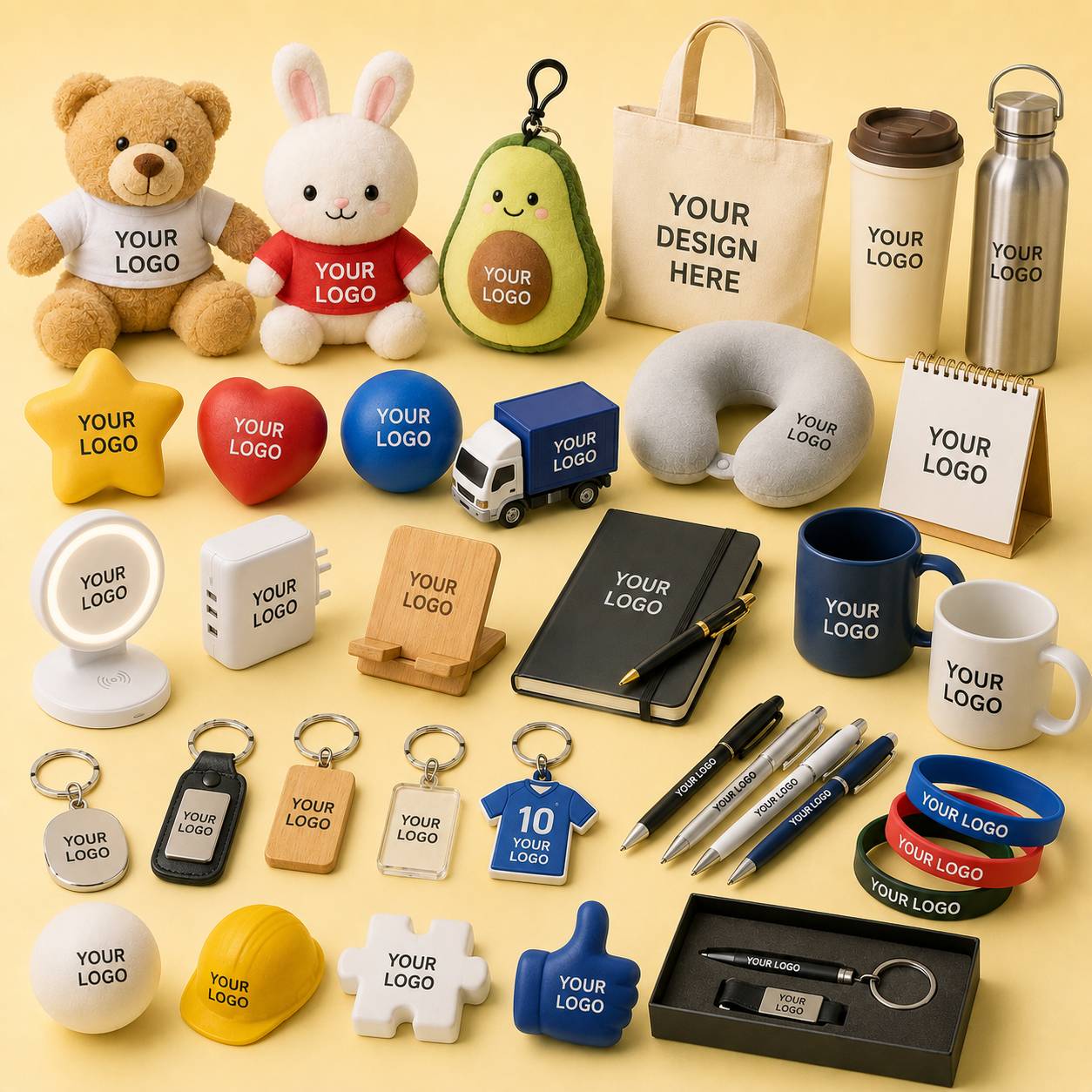
Custom & Promotional Gifts
Customized gift and promotional products designed for brand promotion, corporate events, marketing campaigns and special occasions, with flexible options for custom logos, colors, designs, packaging and private-label solutions.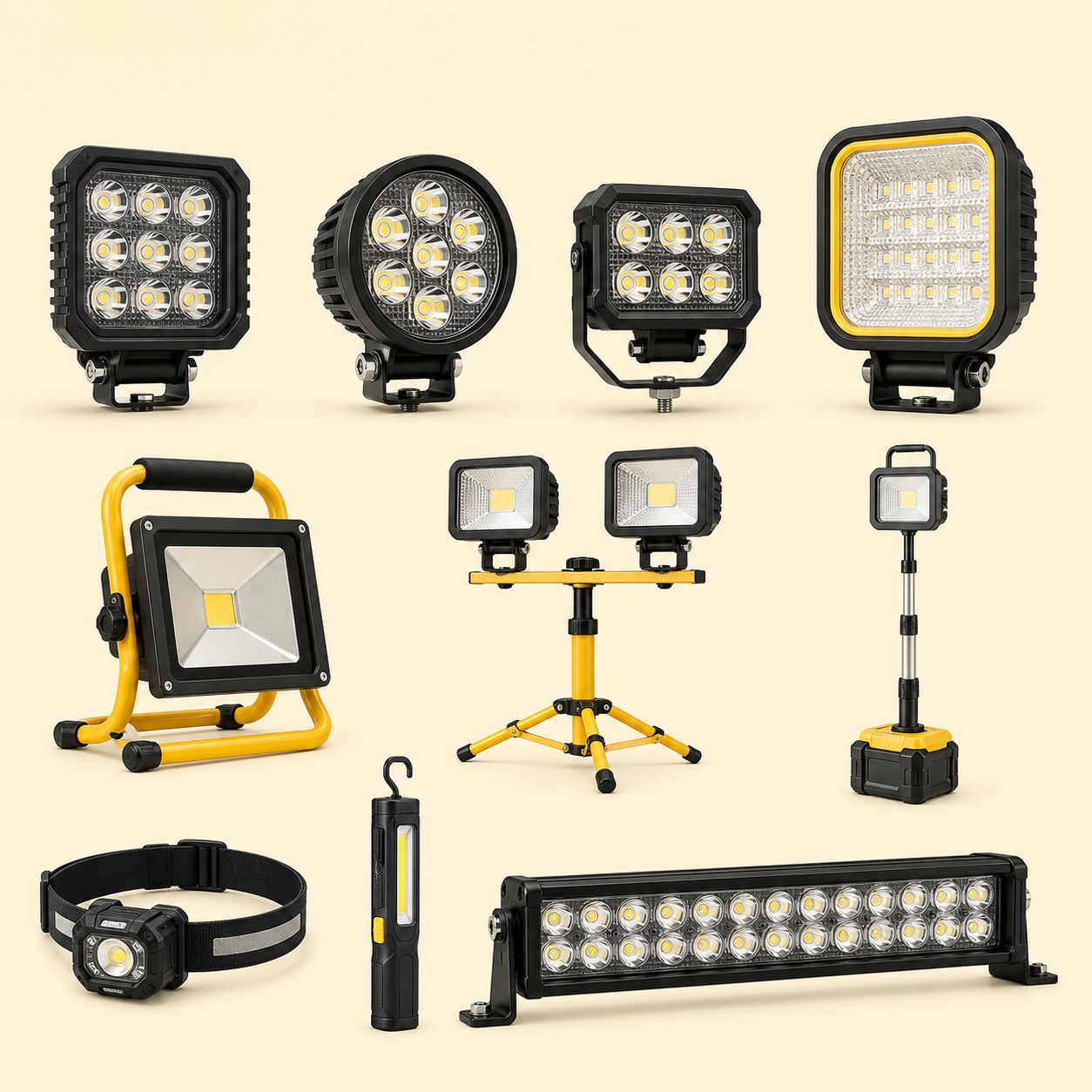
Workshop Lights
Bright and reliable workshop lights for clear illumination in garages, workshops and maintenance areas, available in various portable, rechargeable and adjustable designs for professional use.

TELL US ABOUT YOUR SOURCING NEEDS
Please fill out the form below and we will get back to you as soon as possible.